I have been cutting down on my power requirements but still need a new UPS. Any recommendations?
David, here a link to a discussion “why are UPS such junk?” on the premier electronics discussion group.
And a suggested unit with Lithium battery (danger)!
Oops, for the American market, 110V, but you get the idea.
Thanks TP. I guess when outages are more often due to the UPS than the power supply then it does not make a lot of sense.
I have been in Brisbane for about 18 months and probably had 3 or 4 outages in that time. I think only one was over 2 hours.
Wow, i probably should have asked some of the questions you guys are.
I just got sick of a power outage triggering a 36 hour scrub of my 6 bay nas so i just grabbed this from Umart…
I’ve been very happy with it.
If that was a crap choice i think i’d rather not hear about it 
I gather your NAS is configured to shutdown when the UPS loses main power. I guess now it’s a question of waiting to see how well your UPS holds up.
My previous experience with NASes is they worked OK but the batteries degrade fairly quickly.
In a homelab environment the main issue will be, whether there is enough juice left in the batteries to perform the shutdown sequence. This should be less than five minutes.
I feel that David has again hit the nail on the head. Every UPS is very similar as far as the electronics is concerned. Probably the differences between low end and high end electronics are:
- Serviceability
- Repair documentation
- Thermal design
The batteries have always been the weak point, with lead avid being:
- Most common
- Very heavy
- Bulky
- Expensive
- Lifespan of 3 - 5 years
While more modern batteries such as LIPO represent a danger that lead acid don’t, mainly fire and explosion.
The key to having a reliable UPS (in my opinion) is to have one with a dummy load (not hard to build) so that you can switch your normal server load to the dummy to facilitate load testing to ascertain current battery life. This should be done automatically and regularly with emailed results to you for your records both before and after the test.
When I installed Banyan Vines servers in 1987, they had a self contained UPS in the server base (they looked like a tower pc), along with a DAT tape drive backup and they ran UNIX. This was in the days when servers ran for years with zero downtime and virus/trojans were non-existent.
It was Windows that introduced the world to all the worst horrors of computing.
Finally, we should all be aware that every retail UPS is incredibly cheap and built to a price. A decent PC UPS with inbuilt load and automation probably starts at $5000 USD.
We’ll, I think that UPS of mine has finally packed it in. My NAS has gone down twice over the weekend. I’m gonna take that UPS out of the equation.
What did you end up getting @zeeclor ?
I’m not sure how much it makes sense now that the whole house is running on a battery.
I’m still looking around too, although I don’t have a whole house battery to back me up either.
Given that you’ve got a shiny new home battery, perhaps one or more of these things might be useful - Eaton 3S 36W Mini UPS (3SM36AU) - Umart.com.au? Jaycar sell a generic version as well, which I’ve also been tempted to have a look at.
Something like this might be enough to put in front of a NAS, etc. for a clean shut down in case a circuit breaker trips or someone yanks the wrong power cord.
UPS makes no sense in a house with solar and a battery, in fact it is a poor choice because UPS batteries are nasty little expensive sealed lead acid lead acid units that wear out in a couple of years.
What you want is an Inverter, it takes the battery DC voltage in and outputs 240V AC, you run this all the time, no switch over to internal batteries.
The PC(s) can run permanently on the power from this Inverter, depending on its power capability. This also protects the PC(s) from power and lightning spikes as the Inverter output is electrically isolated from the mains and your battery with only earth being common.
I’m surprised you don’t have such a unit installed already for running household devices from your battery ?
cheers
Terry
I got the APC Back-UPS Pro 1600 and it worked well giving me about 15 minutes of backup, enough time to do an orderly shutdown of the servers and more particularly the NASes. I hooked up the special cable to one of the servers and installed NUTs.
I never got around to configuring the software to do that for the reasons the @techman explains above. The Sungrow system went in six weeks ago and the inverter provides instant backup from the 40 kWh batteries; more than enough to keep me going overnight until the sun comes up the next day.
I have had one outage since the installation. The only thing that went down was the TV.
The only question to consider is whether @Belfry should get a Sungrow battery and ditch the loud, energy chewing “direct” UPS that he has. 
Actually, if that thing comes with an adaptor for my Nas, it might be better than the crappy QNAP power adapter’s that I’m perpetually replacing.
Is an inverter an appliance you buy or a thing in your power box? I’m not electrician @techman , so you’ll have to talk slowly for me 
I read this on a IRC channel just now:
$2500 buys you a 6500VA inverter with stackable 7.68kWh battery that just acts as a giant UPS and accepts solar/grid or solar/generator as input, buy two and you either double the capacity or wire them up for 240V usage, they even support three-phase if you get 3
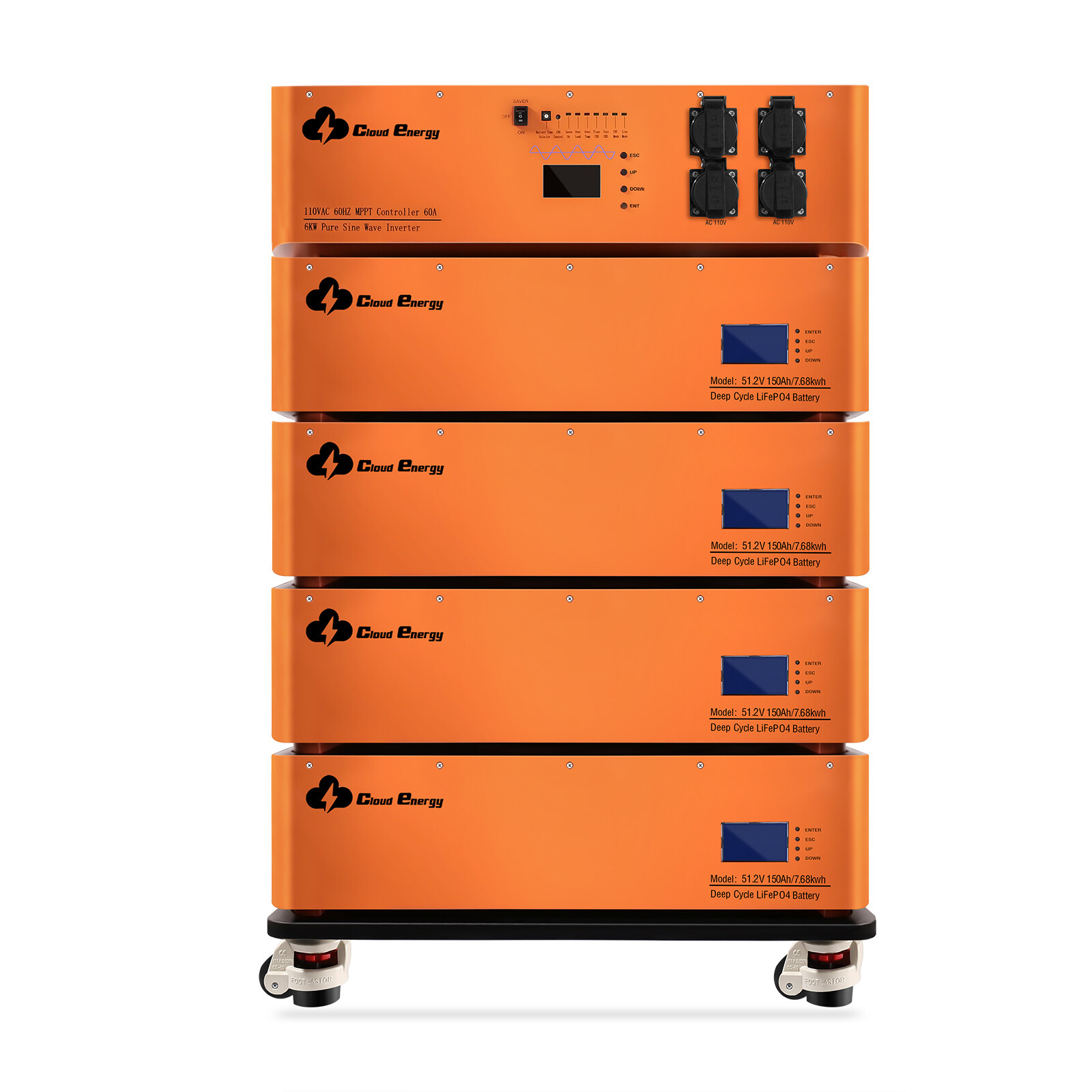
But basically they’re more like a piece of equipment. I’ve been designing them and building them all my working life. However mine have been a lot smaller than this one.
I was 18 years old when I saw my first one, it was made by STC and about the size of six large fridges, including the inbuilt batteries. It took in 230VAC which charged the batteries, and if the mains stopped, it then generated 230VAC back into the building grid. I was told it did this with power SCR’s.
But the new crop of modern electronics have made massive improvements in semiconductor technology as regards efficiency and size.
Nevertheless Inverters are as old as the hills, and have been around forever.
Cheers,
Terry