I finally got my 10" rack project working. After hundreds of commits in my OpenSCAD git repo and probably a wheely bin full of failed 3D prints i have a working prototype on my server rack shelf. Well, it’s really a shoe rack with computers instead of shoes on it.
Before this 10" mini rack, the three computers that i collectively call “robot mafia” were stacked with a bunch of cables and power bricks that never seemed to be in a tidy place.
My colour choices have been pretty ecclectic too, because i just ran whatever filament i had at the time. I’ll probably make a few more enhancements over time, but when i’m settled on a final design i’ll probably print out something with black and silver filament.
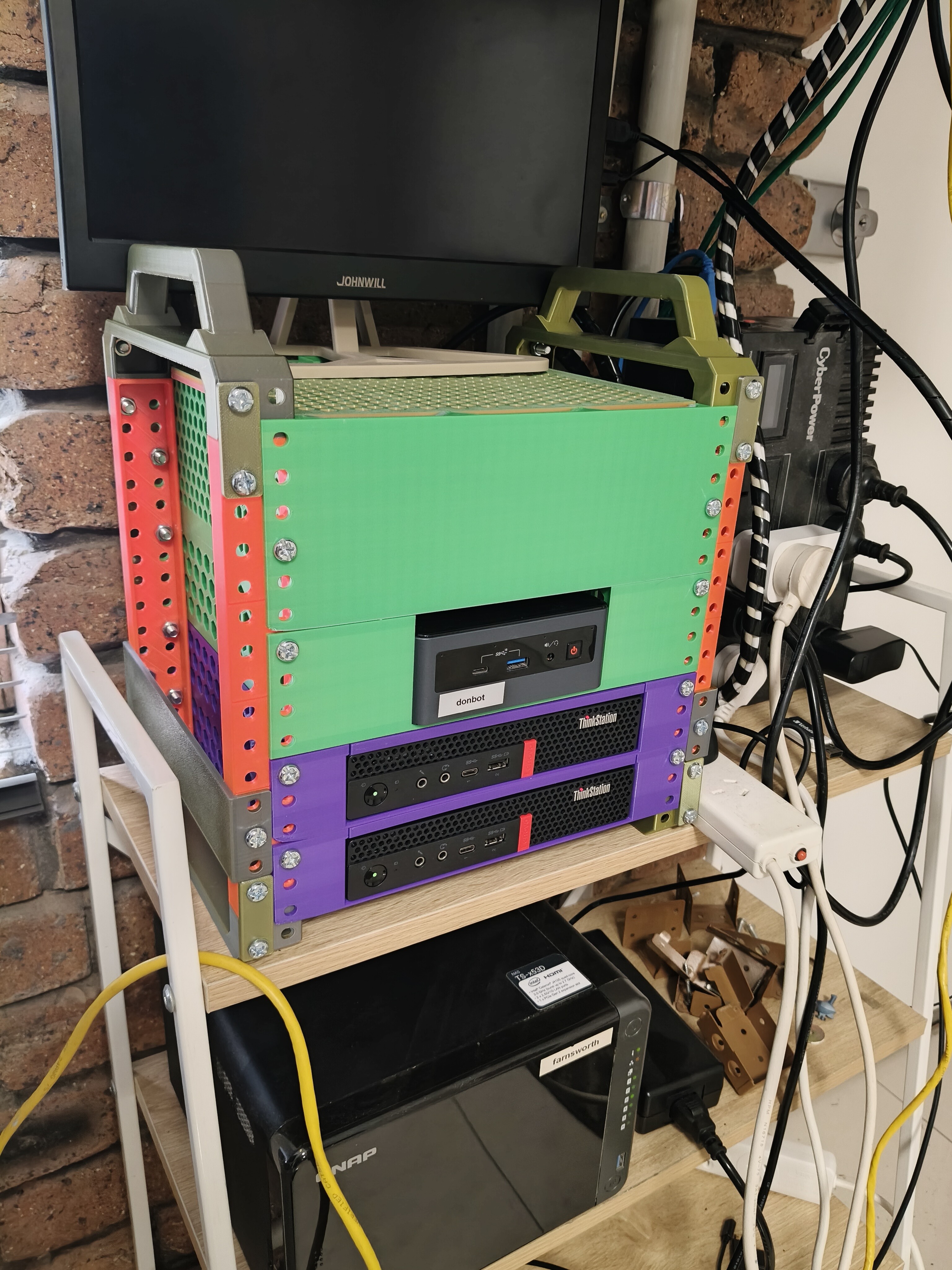
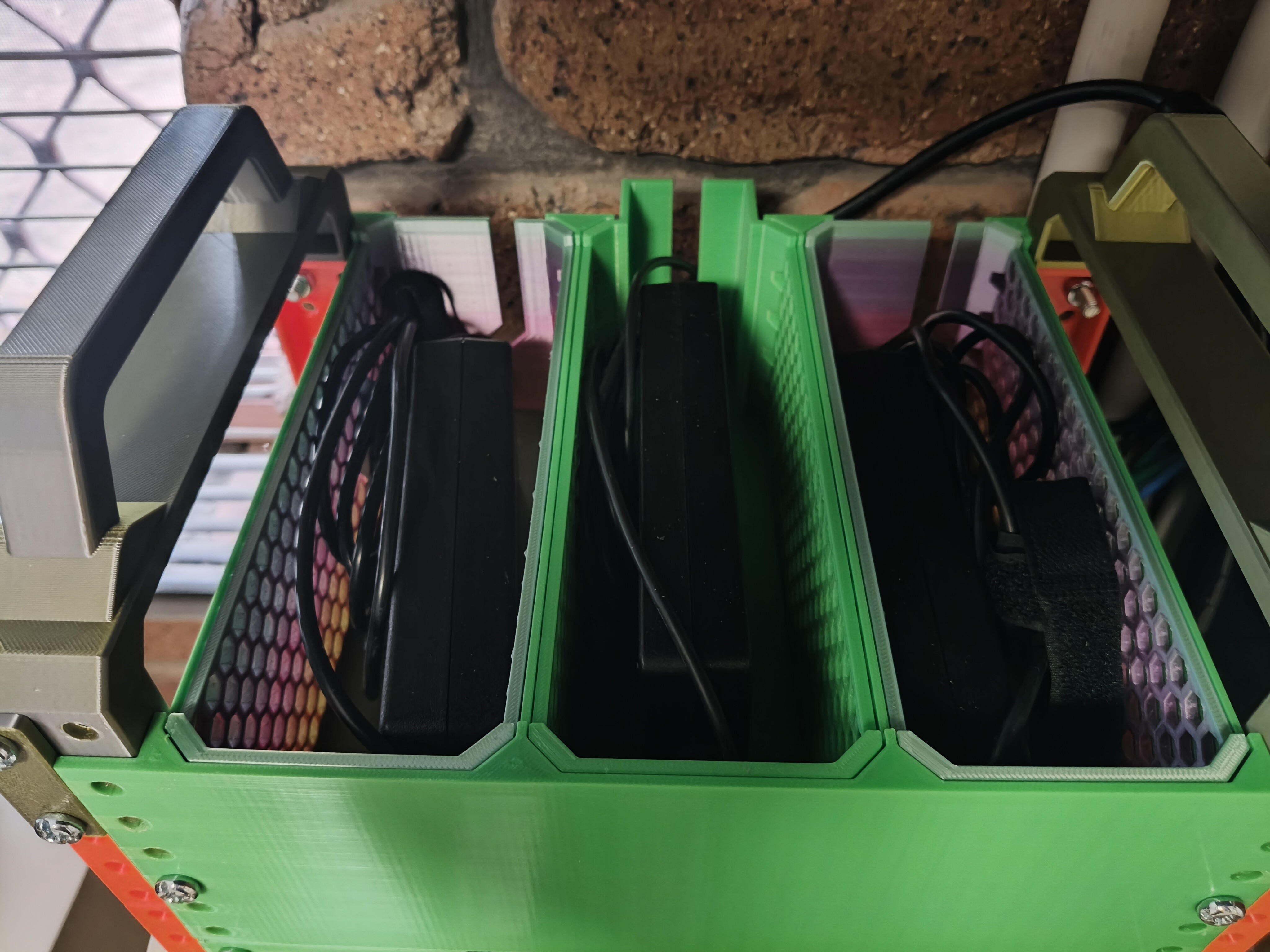
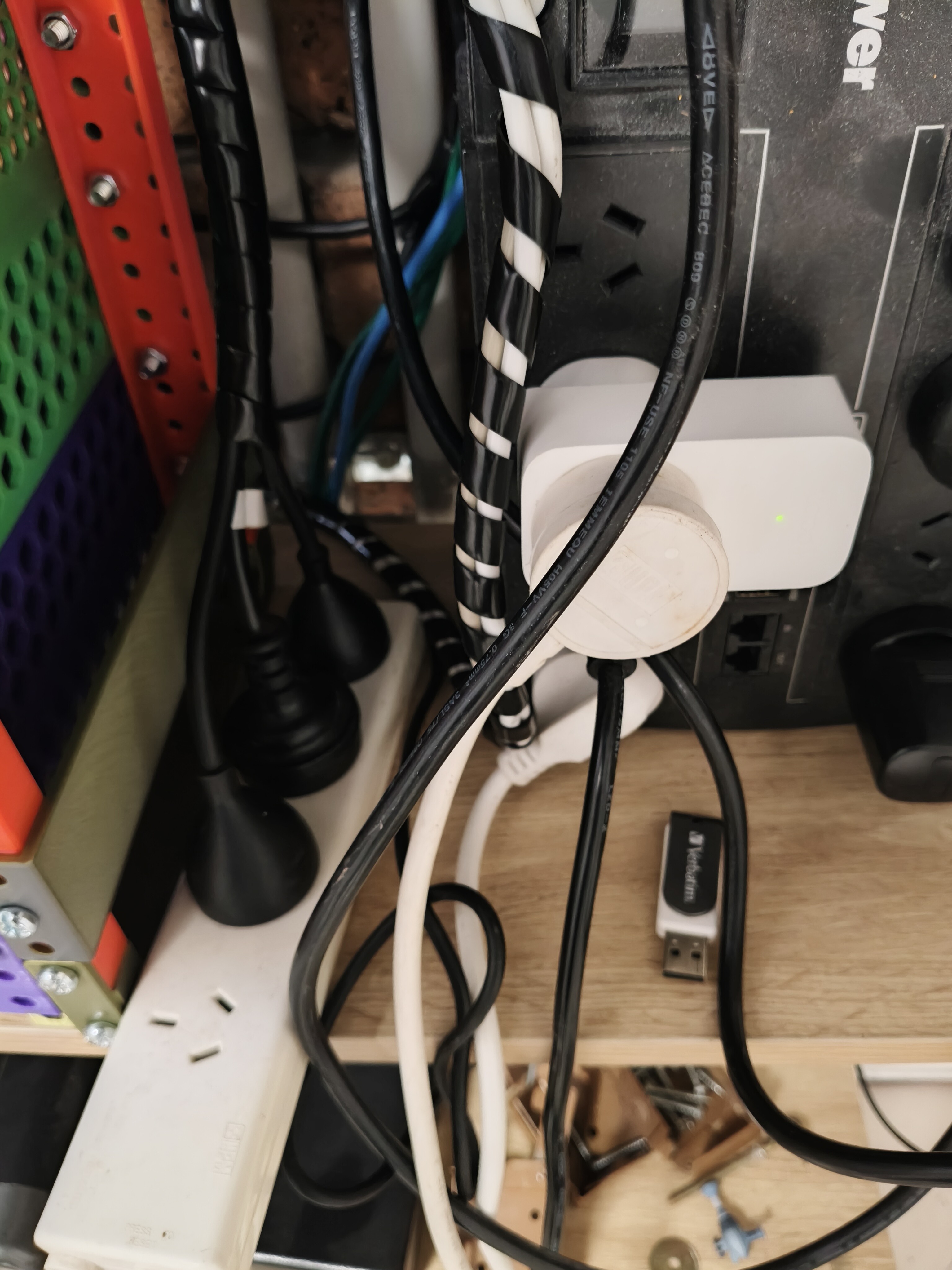
Probably the highlight of this design would be the three bins on the top that contain the power bricks. The middle bin was frustrating because the brick for the Intel NUC was much bigger than those for the Lenovo Thinkstations. All of those power bricks share a single power board that lead into a smart switch that streams power consumption data to home assistant (which happens to be hosted by the k3s cluster running on these three hosts). They are all hanging out of my UPS too, so i should find a way to trigger a graceful shutdown after ten minutes or so of running on battery power.
Anyway, it’s a nice feeling to tick a job off my homelab idea list. I’ve got a whole desktop surface available now too because it’s no longer cluttered up with computers, power bricks and cables.