This is yesterday’s post from Brandon Lee at VirtualizationHowTo. I think it’s good advice and I have followed a few of his recommendations and plan to follow up on some of the others.
I have pi-hole providing DNS for my homelab but he and @Belfry favour technitium.
I have lots of useful things in my local git repository (gitea) but it’s all got a bit messy so I am tempted to start again with Gitlab which I recall @mcrilly saying was a good option.
For automation ArgoCD is also on the list of things to try but how to use it in my lab is still just a vague concept to me.
I am playing with AI but only in the cloud. I note the past discussions here about running local AI models and there limitations. The models are getting better even for local use but I don’t have a decent high end graphics card. So I am stumped (as I was with VLANs without a managed switch). I keep hoping the hardware prices will come down but Ramageddon rages.
Generally however I think Brandon gives excellent advice and he is a prolific poster on homelab technologies so subscribing to his newsletter may give you some ideas on things to try.
Thanks for sharing, @zeeclor. I had a quick look at the post just now and will come back to it and the video in more detail in the coming days when I’ve got more time.
Whatever is doing DNS, I agree with Brandon’s points about making it a first-class service, and also his point earlier in the article about getting the network design right. Might be slightly biased though, given the several talks last year on DNS and VLANs (and IPv6 - get on the IPv6 train!). The design piece is worth thinking through - I want to experiment and learn is probably going to look different to I want to block ads is probably going to look different to I want to stop all those horrid IoT devices at home from going wild is probably going to look different to I want to run big AI/transcoding workloads…
Re: Technitium - I moved to a Technitium cluster around 6 months ago and couldn’t be happier with it. I’ve used Pi-Hole and AdGuard Home before, but I wanted to explore the clustering and redundancy features, and treat it as a first-class service. Setting that up (and getting the network design right) has been part of a broader “hybrid homelab” rollout project throughout 2026. It’d probably make a decent talk towards the back half of the year if there’s any interest from the group.
I think something relevant to us in Australia is the power consumption element as well. That translates directly to cost, either being billed directly, or lost opportunity cost in exports for those with batteries and/or solar. I’m already saving ~$9.50/month net by not hosting stuff at home (after the additional cost of VPSes), and instead moving select services to VPSes and accessing them via Wireguard. I had plenty of other reasons to change my setup at home, but it highlights that power costs aren’t negligible for us and they’re worth considering as part of the soup to nuts process.
So true Belfry and something to account for as Australia is the third most expensive country in the world for electricity !
That’s why my Starlink ‘Dishie’ is now turned off every day 10pm to 6am by a timeswitch as it’s like a continuously lit 35W bulb otherwise.
My PC also goes into sleep mode at the same time, as do I.
But we are also bound to be cut off from that world in the event of war or catastrophe. which is why I have put so much effort into a backup local LLM in case I don’t have access to Deepseek-V4 which is in China.
Nothing competes with the full on AI models, or even comes close, but now the AI genie is out of the bottle there is no going back, and imho, even a dumb-ass local AI genie is still heaps better than no Internet.
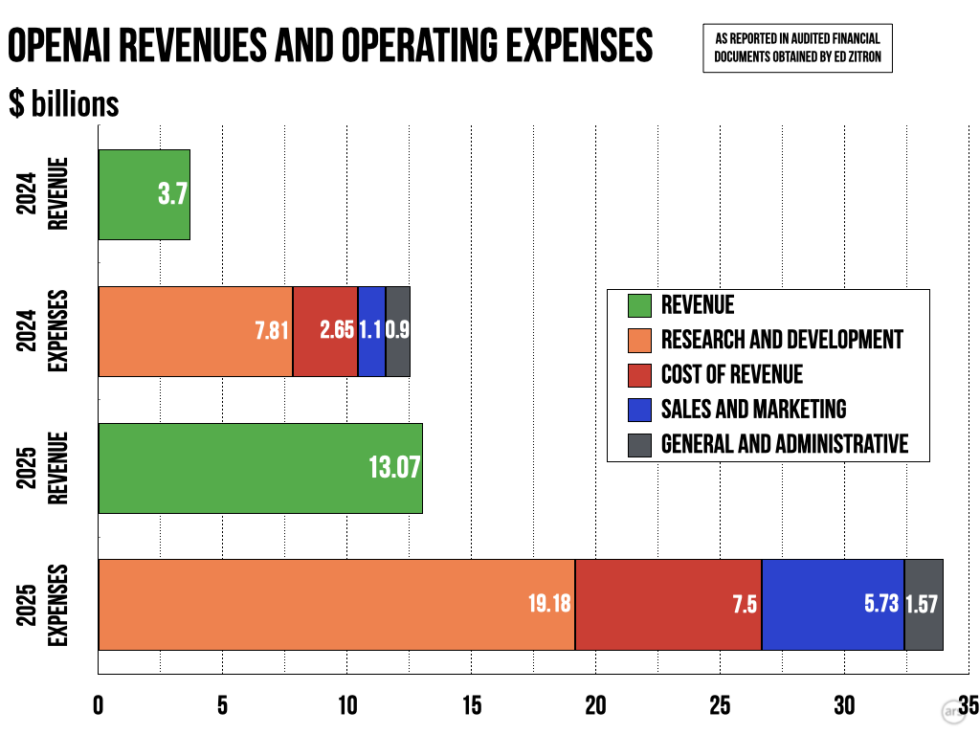
LLMs, and AI more generally, have vastly improved in the last few weeks / months / years. The models are bigger, more capable and more expensive. They constitute a technological revolution in much the same ways as railroads, electrification and the internet have been in the past.
Trillions of dollars are being spent on developing new models and building huge datacentres to change the way we work and interact with the world. Yet the @techman has demonstrated how we can run models, capable of the things most end users need, locally for just the cost of the computer and power.
Given this and the continuing rapid development of sophisticated models, the current enthusiasm for the AI companies’ huge IPOs seems optimistic. I hope my super fund isn’t heavily into SpaceX.
If there’s a crash a number of these companies will go bust. When this happened in the past there were miles of track, wires and fibre optic that would last for a quite a while. A crash this time will just leave a whole lot of superseded servers around … but maybe I can pick up a better GPU next year.
SpaceX hosts Starlink and I’m certain that (baring war) it will be the worlds biggest and most successful company one day. They will be the giant of giants.
Companies like Google. Microsoft and SpaceX all have other proven and profitable sources of income. In their cases AI is only a minor sideline at present.
The Chinese AI’s aren’t in debt for billions, they do everything on the cheap and with the worlds best and cheapest supply chains. They’re here to stay imho.
A research group that includes Huawei Technologies says it completed full-parameter post-training of DeepSeek’s V4-Pro, a 1.6-trillion-parameter model. The group used a cluster of at least 1,000 Huawei Ascend 910C chips, according to the Shenzhen municipal government, as reported by the[u]South China Morning Post[/u].
The revelation is evidence that Chinese accelerators can now handle a training-class workload on domestic silicon, the part of the AI pipeline Chinese firms have had the most trouble moving off Nvidia hardware under U.S. export controls. Huawei carried out the work with the Shenzhen Loop Area Institute, the Shenzhen campus of Harbin Institute of Technology, and the Shenzhen Research Institute of Big Data.
The [u]Ascend 910C[/u] is Huawei’s current flagship AI accelerator, a dual-die part that returned roughly 60% of an Nvidia H100’s inference performance in earlier DeepSeek testing. Chinese chips have been competitive at inference, where a finished model answers prompts, but weak at training, where a model’s weights are recalculated across large datasets. The team says it ran full-parameter post-training, meaning every weight was updated rather than a thin adapter layer added on top.
I guess it depends on whether you see SpaceX as a satellite telcom, a rocket company, an AI, an orbital data centre conglomerate or an interplanetary coloniser.
 (and IPv6 - get on the IPv6 train!). The design piece is worth thinking through - I want to experiment and learn is probably going to look different to I want to block ads is probably going to look different to I want to stop all those horrid IoT devices at home from going wild is probably going to look different to I want to run big AI/transcoding workloads…